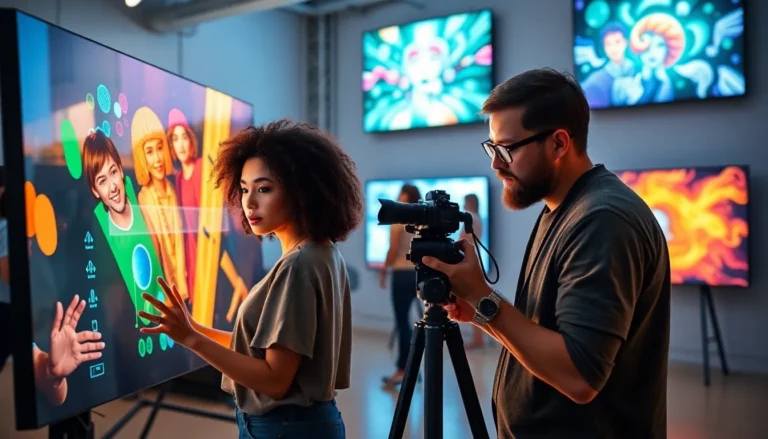
In a world where binge-watching and podcasting reign supreme, audio and visual technology has become the unsung hero of modern entertainment. Whether it’s that epic surround sound that makes explosions feel real or the crystal-clear visuals that bring stories to life, this technology is the magician behind the curtain. It’s not just about watching your favorite shows anymore; it’s about experiencing them.
Imagine transforming your living room into a mini-theater or turning mundane conference calls into engaging presentations. With the right gear, anyone can elevate their audio-visual game. So, buckle up as we dive into the latest trends and gadgets that’ll make you the envy of all your friends—and maybe even your cat. Get ready to explore how these innovations are reshaping the way we consume content and connect with the world around us.
Table of Contents
ToggleOverview of Audio and Visual Technology
Audio and visual technology plays a crucial role in modern entertainment and communication. Devices such as smart TVs, projectors, and sound systems enhance viewing and listening experiences. High-definition imaging and immersive surround sound technologies contribute significantly to the overall enjoyment of movies, music, and presentations.
Streaming platforms integrate advanced audio-visual systems, allowing users to enjoy content in various formats. The demand for quality equipment, like soundbars and Bluetooth speakers, has risen, reflecting consumer preferences for home theaters and superior sound experiences. Innovations in virtual reality (VR) and augmented reality (AR) also redefine how individuals engage with content.
Collaboration tools, including video conferencing software and high-resolution web cameras, improve remote communication. Such technologies create engaging environments for meetings and presentations, fostering better interaction among participants. As businesses adopt advanced solutions, the focus shifts toward seamless integration of audio and visual elements.
Emerging trends highlight the importance of accessibility in audio and visual technology. Users increasingly seek devices that accommodate diverse needs, including captions and audio descriptions. Manufacturers respond by developing products that prioritize inclusivity, ensuring everyone can enjoy rich audio-visual experiences.
Overall, the evolution of audio and visual technology continues to shape interactions in both personal and professional contexts. Innovations enhance experiences and foster connections, offering more immersive and engaging ways to interact with content and each other.
Key Components of Audio and Visual Technology
Audio and visual technology relies on key components that significantly enhance user experiences in entertainment and communication.
Audio Equipment
Sound systems serve as essential elements in audio technology. They provide high-quality sound for movies, music, and presentations. Devices like soundbars, surround speakers, and headphones deliver immersive audio experiences that draw listeners deeper into content. Digital signal processors (DSPs) optimize sound quality by adjusting frequencies and managing sound levels. Wireless audio solutions, including Bluetooth speakers, promote convenience and flexibility for users. Furthermore, microphones play a crucial role in capturing clear sound, enhancing communication in video calls and recordings.
Visual Equipment
Visual equipment includes devices that enhance the viewing experience. Televisions, projectors, and monitors deliver crisp images and vibrant colors for media consumption. Smart TVs feature integrated streaming services that simplify access to content. Projectors provide flexible display options for large audiences, making them ideal for presentations. High-resolution screens, such as 4K and 8K displays, present exceptional detail and clarity. Additionally, augmented reality (AR) and virtual reality (VR) headsets offer immersive visual experiences, redefining entertainment and training applications.
Applications of Audio and Visual Technology
Audio and visual technology plays a crucial role in various fields, enhancing experiences and improving communication.
In Entertainment
Entertainment thrives on advanced audio and visual technology. Streaming platforms utilize high-definition imaging and surround sound to create immersive viewing experiences. Smart TVs, projectors, and sound systems significantly enhance the consumption of movies, music, and live events. Virtual reality headsets transport users into new realms, redefining how audiences engage with content. Moreover, augmented reality applications enrich gameplay and interactive experiences, captivating users’ attention. Special effects in films benefit from cutting-edge visual technology, creating captivating narratives. Sound quality also influences overall enjoyment, showcasing the vital connection between technology and user experience in entertainment.
In Education
In the education sector, audio and visual technology enhances learning environments. Interactive whiteboards and projectors transform classrooms into dynamic spaces for collaboration. Video conferencing tools facilitate remote learning, bridging gaps for students and educators. Virtual lessons leverage high-quality audio and video to ensure comprehension and engagement. Multimedia presentations integrate graphics and sound, making concepts easier to grasp. Accessibility features like captions and audio descriptions accommodate diverse learning needs, fostering an inclusive atmosphere. Overall, audio and visual tools significantly impact teaching methodologies, promoting better educational outcomes and engagement.
Trends in Audio and Visual Technology
Audio and visual technology continues to evolve rapidly, presenting new possibilities for users. Innovations are at the forefront, driving improvements in user-centric experiences.
Emerging Technologies
Artificial intelligence (AI) enhances audio and visual tech, enabling smarter sound systems and interactive displays. AI-driven voice recognition in devices allows for hands-free control and personalized responses. 3D audio technology transforms sound landscapes, providing an immersive experience that adapts to user movements. Additionally, spatial computing combines physical and digital environments, enriching how users interact with media. Streaming services increasingly incorporate advanced compression techniques, improving quality while reducing bandwidth usage. Gamification elements in educational tools engage learners through interactive audio and visuals, tailoring experiences to individual needs.
Future Predictions
Future advancements in audio and visual technology will likely emphasize seamless integration across devices. Wireless systems will emerge as the standard, eliminating clutter and enhancing connectivity. Enhanced virtual reality experiences will redefine how individuals engage with entertainment and education. Demand for high-resolution displays will also grow, pushing manufacturers to deliver ultra-HD and 8K options. Personalization will trend as audio and visual setups adapt more closely to individual preferences. Increased focus on sustainability is expected, driving eco-friendly manufacturing practices and energy-efficient devices. As these trends develop, they will reshape the way people interact with content across various platforms.
The landscape of audio and visual technology is constantly evolving. As advancements continue to emerge, users can expect even more immersive experiences that redefine how they engage with content. Innovations in AI and 3D audio are just the beginning of a wave of enhancements that promise to enrich both personal and professional interactions.
Accessibility remains a priority, ensuring that everyone can enjoy these technologies. With a focus on sustainability and personalization, the future looks bright for audio and visual tech. As individuals embrace these advancements, their connection to entertainment and communication will only deepen, paving the way for richer experiences in every aspect of life.