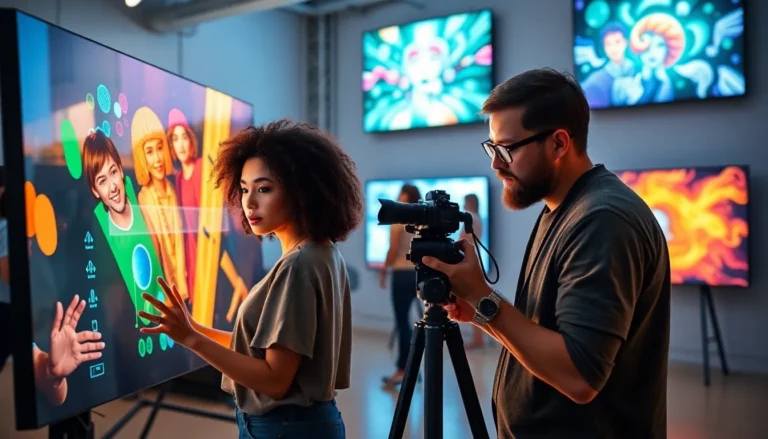
In a world where attention spans are shorter than a cat video, art audio and video technology have stepped up to the plate—swinging for the fences! These innovative tools don’t just make communication easier; they turn it into a captivating experience. Imagine transforming a mundane presentation into a dynamic visual feast or using soundscapes that make even the most boring data sing.
Table of Contents
ToggleOverview of Art Audio/Video Technology and Communication
Art audio and video technology plays a critical role in enhancing communication. These tools transform ordinary presentations into dynamic experiences. Using high-quality audio and visuals captures attention and maintains interest. Accessibility of advanced equipment and software makes it easier for creators to implement artistic concepts.
Podcasts represent a popular audio communication medium. They allow creators to convey complex ideas through storytelling. Video presentations leverage visuals alongside audio to enhance understanding. Incorporating graphics and animations elevates engagement levels significantly.
Multimedia installations combine different forms of art to stimulate multiple senses. By integrating sound, video, and interactive elements, these installations create immersive experiences. Artists can now reach wider audiences through streaming services and social media platforms. Live broadcasts and recorded content reach viewers globally, breaking geographical barriers.
Collaboration tools have also evolved, enabling remote teams to work together seamlessly. Online platforms support sharing audio and video files for collective production processes. Enhanced opportunities for feedback ensure projects improve continuously.
Educational settings benefit greatly from art audio and video technologies. Teachers utilize these tools to create memorable lessons, capturing students’ attention. Virtual exhibitions showcase artistic creations to broader audiences, fostering cultural exchange.
Research indicates that the integration of art audio and video enhances audience retention and comprehension. Art and technology combined provide compelling narratives that resonate emotionally. Understanding this interplay enables professionals to communicate ideas effectively while engaging audiences in meaningful ways.
Evolution of Art Audio/Video Technology
Art audio and video technology has evolved significantly, shaping communication in unprecedented ways. Transformations in this field continue to redefine how creators engage audiences.
Historical Context
Early audio and video technologies laid the groundwork for today’s advancements. The invention of the phonograph in 1877 marked a breakthrough, allowing sound recording and playback. In the 1900s, motion pictures began integrating sound, leading to a new era of storytelling. Television emerged in the mid-20th century, bringing visual narratives into households nationwide. Each advancement expanded the toolkit available for artists, significantly impacting the way messages were conveyed.
Key Developments
Innovative tools have emerged, revolutionizing the production and distribution of audio and video content. The rise of digital technology in the late 20th century introduced multimedia capabilities, merging sound, visuals, and interactivity. Streaming platforms proliferated in the early 2000s, providing audiences 24/7 access to content. Mobile devices equipped with high-quality cameras and editing software transformed everyday users into content creators. Enhanced collaboration tools, like cloud-based services, facilitate teamwork across geographical boundaries, pushing artistic boundaries further. These developments create dynamic experiences that engage and resonate with audiences, solidifying the role of art audio and video technology in contemporary communication.
Impact on Artistic Expression
Art audio and video technology significantly influences creative expression. These tools empower artists to explore new avenues to convey their messages.
Enhanced Creativity
Creativity thrives on innovation. Artists leverage advanced audio and video technology to experiment with soundscapes and visual formats. New software applications enable manipulation of sound and imagery, resulting in unique artworks. Collaboration between disciplines fosters groundbreaking approaches to storytelling. Artists explore a multitude of possibilities through interactive installations that captivate audiences. The ability to integrate multiple sensory experiences encourages deeper audience engagement. Research shows that immersive experiences increase emotional connections, enhancing overall appreciation for the art.
New Forms of Art
Emerging technology opens doors to new artistic mediums. Artists now create digital installations and interactive experiences that challenge conventional definitions of art. Video art gains popularity through platforms like YouTube and Vimeo, reaching global audiences. Virtual reality offers immersive environments that transcend physical limitations, inviting viewers into entirely new worlds. Augmented reality blends digital elements with the real world, creating experiences that engage users interactively. These innovations expand the boundaries of traditional art forms, allowing for fresh expressions and concepts. As technology advances, the art landscape continues to evolve, inviting endless exploration and creativity.
Communication in the Digital Age
Art audio and video technology has transformed communication in today’s digital landscape. Innovative platforms allow for real-time sharing and interaction, making engagement seamless and effective.
Role of Social Media
Social media platforms play a significant role in the dissemination of art audio and video content. They serve as vital channels for artists to connect with audiences, share creative processes, and foster discussions. Platforms like Instagram and TikTok enable users to showcase their work, reaching wider demographics through visually appealing presentations. Content that incorporates high-quality audio and video garners higher engagement rates, making it essential for creators. Allowing followers to interact with artistic expressions enhances community building and encourages collaborative projects.
Global Collaboration
Global collaboration flourishes through art audio and video technology. Artists and communicators across different cultures share ideas and experiences via digital tools, creating a melting pot of innovation. Cloud-based platforms facilitate the exchange of concepts and resources, enabling cross-border teamwork on projects that might otherwise lack opportunities. Joint ventures produce unique works that transcend local influences, showcasing diverse perspectives. Video conferencing tools make it simple for teams to brainstorm and refine concepts, regardless of geographic barriers. The synergy between creatives fosters a vibrant global art scene that continually evolves.
Challenges and Controversies
Art audio and video technology faces various challenges and controversies that impact its effectiveness and ethical implications.
Accessibility Issues
Accessibility remains a major concern in art audio and video technology. Many artists overlook the needs of individuals with disabilities, limiting the experiences of diverse audiences. Closed captioning and audio descriptions often lack implementation, making content exclusive. Additionally, not all platforms provide user-friendly interfaces for those with visual or hearing impairments. Failure to prioritize accessibility alienates a significant portion of potential viewers. Addressing these gaps ensures equal opportunities for everyone to engage with art, fostering inclusivity.
Ethical Considerations
Ethical considerations play a critical role in the art audio and video landscape. Questions surrounding copyright and intellectual property arise frequently, as the ease of sharing content online blurs ownership lines. Artists must navigate the complexities of originality while building on existing works. Moreover, issues related to data privacy and user consent are paramount, especially when collecting information for targeted marketing. Transparency in how artists use technology resonates with audiences, fostering trust and respect. Keeping these ethical considerations in mind contributes to a responsible and sustainable art environment.
Art audio and video technology is reshaping the landscape of communication and artistic expression. By enhancing engagement and fostering creativity, these tools empower artists and communicators to connect with audiences in profound ways. The integration of multimedia elements transforms traditional narratives into immersive experiences that resonate on multiple levels.
As the digital age continues to evolve, the importance of accessibility and ethical considerations becomes increasingly evident. Addressing these challenges ensures that the benefits of art audio and video technology are available to all. Embracing innovation while prioritizing inclusivity will pave the way for a vibrant and diverse artistic community.