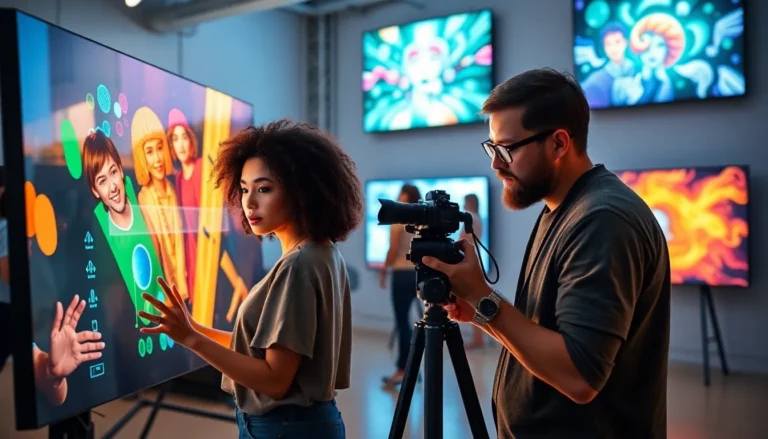
In a world where visuals and sounds can make or break a message, arts audio/video technology and communications have become the secret sauce behind captivating content. From the dramatic flair of a well-edited film to the crisp clarity of a podcast, these tools transform mundane ideas into unforgettable experiences. Who knew that mixing sound and visuals could be so powerful?
Imagine creating a stunning video that not only grabs attention but also keeps viewers glued to their screens. Or picture crafting an audio masterpiece that makes listeners laugh, cry, or even dance in their living rooms. With the right tech and a sprinkle of creativity, anyone can become a maestro in the art of communication. So let’s dive into this vibrant world where innovation meets imagination, and discover how to elevate storytelling to an art form.
Table of Contents
ToggleOverview of Arts Audio/Video Technology and Communications
Arts audio/video technology and communications provide vital tools for enhancing expression and storytelling. This technology encompasses various digital mediums, including sound recordings, video production, and broadcasting. Each medium allows creators to present ideas dynamically while engaging their audiences effectively.
Multiple applications of audio and video technologies exist in fields such as music, film, and education. For instance, filmmakers utilize advanced editing software to create immersive experiences. Educators leverage video streaming and podcasts to present lessons in a captivating manner, ensuring students engage actively.
The role of sound and visuals extends beyond entertainment; these technologies enhance social communications. Podcasts allow individuals to share knowledge on diverse subjects, fostering discussions across global platforms. Similarly, webinars facilitate remote learning and professional development by connecting experts with interested audiences.
Innovations in technology continue to shape how individuals communicate through these mediums. High-definition video and surround sound enrich viewing and listening experiences, drawing viewers into narratives more deeply. With the rapid evolution of social media, creators can easily distribute their audio and video content, reaching wider audiences effortlessly.
Understanding the importance of arts audio/video technology strengthens one’s creative capabilities. By mastering these tools, individuals can explore new avenues for communication and expression, transforming their ideas into compelling stories. As they incorporate technology into their art, they also encourage creativity and imagination, becoming skilled communicators in the process.
Key Components of Audio/Video Technology
Audio and video technology encompasses a range of components essential for effective communication and storytelling.
Sound Design and Engineering
Sound design shapes the auditory experience in various media. It involves capturing recordings, editing sounds, and integrating audio into visual projects. Engineers focus on creating sound effects that enhance the emotional impact of narratives or experiences. Mixing techniques combine multiple audio sources, ensuring clarity and balance. Additionally, mastering optimizes audio for various playback systems, making a significant difference in the final product. Professionals must understand acoustics and spatial awareness, allowing them to create immersive environments. Knowledge of industry-standard software also plays a crucial role in achieving high-quality sound.
Video Production Techniques
Video production techniques encompass pre-production planning, shooting, and post-production editing. Concept development starts the process, where creators outline their vision and define project goals. During the shooting phase, cinematography principles guide camera angles and lighting, influencing the visual storytelling. Editors use software to assemble footage, apply special effects, and create a cohesive narrative. Color grading enhances the visual appeal by adjusting tones and contrasts. Finally, integrating sound adds depth to the completed piece, ensuring a polished and engaging final product. Each technique contributes to the overall effectiveness of the video in conveying its message.
Role of Communications in Arts
Communications play a pivotal role in the arts, enhancing how creators connect with audiences. Engaging content can captivate and inform, leaving lasting impressions.
Importance of Effective Communication
Effective communication transforms artistic expressions into impactful experiences. Clarity in messaging helps convey complex ideas, drawing audiences into the narrative. Moreover, interaction between artists and viewers creates dynamic conversations, fostering community engagement. Art that communicates well resonates stronger, prompting emotional responses and critical thinking. Additionally, successful collaboration among artists and technicians improves overall production quality, enriching the final output enjoyed by audiences.
Technologies Enhancing Communication
Technological advancements significantly boost communication in the arts. Tools such as video streaming platforms allow instant sharing of performances, broadening audience reach. Audio enhancements, like surround sound systems, create immersive environments, further engaging viewers. Social media serves as a vital communication channel, enabling artists to showcase diverse works and receive feedback promptly. Editing software plays a crucial role in refining visual storytelling, ensuring narratives flow seamlessly. Innovations in virtual reality and augmented reality offer unique interactive experiences, transforming traditional perceptions of art and storytelling.
Innovations in Arts Audio/Video
Innovations in arts audio and video technologies transform how creators express their ideas and connect with audiences.
Emerging Technologies and Trends
Artificial intelligence plays a significant role in shaping audio and video production. AI-driven tools streamline editing processes, offering creators enhanced efficiency while allowing them to focus on storytelling. Virtual reality increasingly provides immersive experiences, engaging audiences like never before. Live streaming technology revolutionizes performances, enabling real-time interactions between artists and viewers. Furthermore, 3D audio creates an enveloping listening environment, deepening emotional engagement. These advancements empower artists to push creative boundaries, enriching the artistic landscape.
Case Studies of Successful Implementations
The film industry frequently showcases successful technological applications. For instance, “The Mandalorian” integrates virtual production techniques with LED walls, creating immersive environments while minimizing location shooting. Another example includes the use of podcasts in education, which enhances student engagement through dynamic audio content. Artists have adopted interactive installations that utilize augmented reality, inviting audience participation and expanding traditional art forms. Lastly, brands leverage social media platforms to effectively showcase their projects, achieving wider reach and audience interaction, thereby enhancing brand storytelling.
Challenges in the Industry
Audio and video technology faces several challenges that impact its growth and effectiveness. Rapid advancements in technology create a constant need for upskilling among professionals. Keeping pace with emerging tools and trends can overwhelm creators and technicians alike. Inequities in access to advanced technology also pose a significant hurdle, limiting opportunities for artists in underfunded communities.
Budget constraints frequently affect production quality. Small productions often struggle with financing for high-end equipment and expert personnel. This limitation can result in compromised audio and visual experiences. Additionally, high competition for audience attention increases pressure on creators. Standing out among countless content options requires innovative approaches and high production values.
The rapid evolution of social media platforms introduces its own set of challenges. Frequent algorithm changes can diminish content visibility, impacting audience reach. Artists must adapt their marketing strategies constantly to maintain engagement. Moreover, balancing artistic expression with commercial viability remains a critical tension within the industry.
Collaboration among artists and technical teams can also encounter obstacles. Miscommunication might hinder the creative process, leading to less cohesive final products. Establishing effective workflows and maintaining open lines of communication is essential for success.
Cybersecurity threats have also emerged as a pressing concern. With the increasing reliance on digital platforms, protecting intellectual property from unauthorized use is a growing challenge. Maintaining integrity and security in production processes requires careful attention and investment in protective measures.
Navigating these challenges demands creativity and resilience. Overcoming barriers in technology, finance, and collaboration can lead to innovative solutions and growth in the audio and video sector.
The landscape of audio and video technology continues to evolve rapidly, offering unprecedented opportunities for creative expression and communication. By embracing these advancements, individuals can elevate their storytelling abilities and engage audiences like never before.
As the industry faces challenges such as the need for constant learning and the complexities of collaboration, those who adapt will thrive. The integration of innovative tools and platforms not only enhances artistic endeavors but also fosters meaningful connections within communities.
Ultimately, the future of arts audio and video technology lies in the hands of those willing to explore its potential, pushing boundaries and redefining how stories are told and experienced.