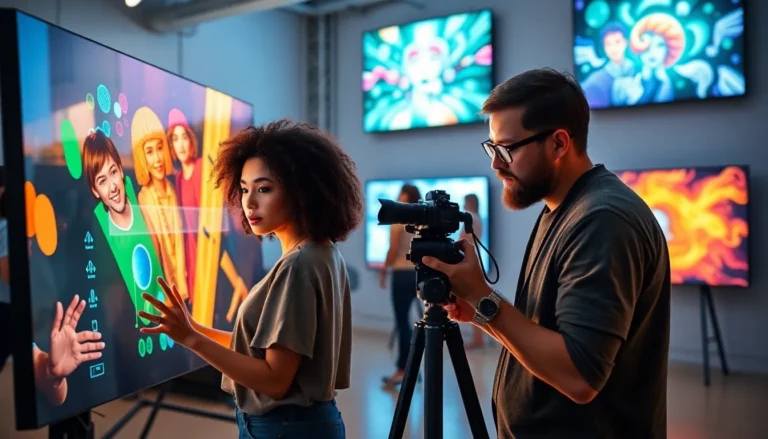
In a world where creativity meets cutting-edge technology, the realms of arts, audio/video technology, and communications are sparking a revolution. Imagine blending the brushstrokes of a painter with the precision of a filmmaker, all while keeping a chatty robot as your assistant. Sounds like a dream, right? Well, it’s not just a fantasy; it’s the vibrant reality of today’s digital age.
Table of Contents
ToggleThe Intersection of Arts, Audio/Video Technology, and Communications
The fusion of arts and technology creates innovative experiences in various media. Creative professionals leverage audio and video technology to enhance storytelling, allowing deeper emotional connections with audiences. Sound design enriches film and theater, transforming the way narratives unfold. Visual artists employ projection mapping, infusing their work with dynamic elements that capture audience attention.
Collaborations between artists and technologists drive this evolution. Designers and filmmakers combine efforts, producing immersive environments that blend visual art with audio exploration. Performers use augmented reality to engage viewers in new, interactive formats, breaking traditional boundaries. These partnerships enable unique approaches, creating art that resonates in today’s digital landscape.
Moreover, communication platforms play a vital role in this intersection. Streaming services provide a stage for artists, democratizing access to diverse artistic expressions. Podcasts and video blogs encourage dialogue about art, expanding audiences and fostering community engagement. Through social media, artists share their work instantly, connecting with global viewers, which enhances visibility and collaboration opportunities.
Technological advancements continue shaping artistic expression. Virtual reality immerses users in environments, transforming passive viewing into active participation. This kind of technology invites experimentation, allowing creators to push boundaries and explore new forms of storytelling. Innovations like artificial intelligence streamline production processes, making art creation more efficient and accessible.
Artistic disciplines increasingly rely on audio/video technology and communication methods to convey messages. These interactions contribute to dynamic cultural dialogues, fostering creativity and encouraging new ideas. Embracing this intersection paves the way for a vibrant artistic future, where possibilities expand with each technological breakthrough.
The Role of Audio/Video Technology in Arts
Audio and video technology significantly enhances artistic expression. These technologies enable artists to explore new creative possibilities, making experiences more immersive and engaging.
Innovations in Audio Technology
Innovative audio tools transform sound design for various artistic fields. Spatial audio systems immerse listeners in environments where sound seems to originate from multiple directions. Artists utilize immersive soundscapes to evoke emotions, drawing audiences deeper into the narrative. Surround sound technologies enrich film projects, allowing sound to envelop viewers completely. Detailed sound editing software grants creators control over every element, permitting precise adjustments. Techniques like sound layering build complex auditory experiences, enhancing storytelling. Collaborative audio platforms allow artists to share and develop projects in real time, fostering creativity across borders.
Advances in Video Technology
Video technology advances filmmaking and visual arts, offering creative professionals unparalleled tools. High-definition cameras capture images with stunning clarity, pushing the boundaries of visual storytelling. Aerial drones provide unique perspectives, creating dynamic shots that captivate viewers. Augmented reality overlays digital content onto the physical world, enriching artistic presentations. Software for video editing simplifies complex tasks, allowing creatives to produce polished pieces efficiently. Interactive video installations encourage audience participation, merging physical and digital experiences. Emerging fields like 360-degree video broaden artistic horizons, enabling fully immersive viewing experiences.
Impact on Communication Methods
The evolution of communication methods reflects significant advancements in technology. Evolving digital platforms reshape the way creators connect with their audiences.
Digital Transformation of Communication
Digital transformation revolutionizes how individuals exchange ideas and information. Social media platforms facilitate real-time interaction, allowing artists to share work instantly. Streaming services broaden access to artistic content, enhancing the discoverability of various art forms. Mobile applications empower creators to engage with audiences on the go. Enhanced accessibility means diverse perspectives reach wider audiences, promoting inclusivity in artistic expression.
Enhancing Engagement Through Technology
Technological innovations amplify audience engagement during artistic experiences. Immersive audio-visual elements captivate viewers and draw them into the artwork. Virtual reality experiences offer completely new ways to interact with art, allowing individuals to experience environments uniquely. Gamification elements in installations encourage audience participation, fostering deeper connections. Community-driven projects benefit from collaborative tools that enhance communication among creators, promoting shared artistic journeys. Enhanced engagement through technology creates lasting memories and encourages ongoing dialogue about art.
Case Studies in Arts and Technology
The intersection of arts and technology showcases innovative collaborations and projects that redefine creativity.
Successful Collaborations
Many artists team up with technologists to create groundbreaking works. Paintings now come to life through dynamic projections, engaging viewers more deeply. Filmmakers use audio innovations to craft immersive experiences, capturing audiences with enriched soundscapes. Artists also employ augmented reality to transform public spaces into interactive environments, inviting community engagement. Collaborations between graphic designers and programmers yield interactive installations that respond to viewer input, fostering a unique dialogue between the art and its spectators.
Notable Projects and Initiatives
Numerous initiatives highlight the fusion of art and technology. The “Art in the Age of AI” project features artists creating works using artificial intelligence, pushing boundaries of traditional art forms. “Virtual Reality Museum” invites users to explore immersive exhibitions from home, making art accessible to everyone. Additionally, the “Soundwalk” initiative combines music and nature, utilizing audio technology to enhance outdoor experiences. Live-streamed performances enable artists to reach global audiences in real-time, breaking geographical barriers and encouraging cultural exchange. These projects pave the way for future innovations in arts and technology.
Future Trends in Arts and Audio/Video Technology
Innovation thrives at the intersection of arts and technology, shaping future trends that redefine creative expression. Emerging technologies continue to revolutionize the landscape.
Emerging Technologies
Virtual reality and augmented reality lead the way in immersive experiences, creating interactive environments for artists and audiences. Artificial intelligence enhances creative processes, generating unique compositions in visual art and music. Blockchain technology offers new avenues for art ownership and provenance. Spatial audio systems and advancements in sound design enrich storytelling by creating depth in auditory experiences. Live streaming technology democratizes access to performances, allowing global audiences to connect with artists in real time. Drones capture stunning aerial art installations, adding perspective to visual narratives. All these technologies work together, pushing boundaries and expanding creative possibilities.
Predictions for Communication Evolution
Communication methods will evolve significantly, driven by technological advancements. Social media platforms will continue to change how artists distribute their work, fostering instant connections with audiences worldwide. Streaming services are expected to enhance discoverability, allowing diverse art forms to reach broader demographics. Mobile applications will empower real-time engagement, letting creators and audiences interact seamlessly. Future innovations may include AI-driven communication tools that tailor interactions based on individual preferences. Gamification will likely encourage participation, prompting audiences to engage with art in new and dynamic ways. These trends promise an expansive future for artistic collaboration and cultural dialogue.