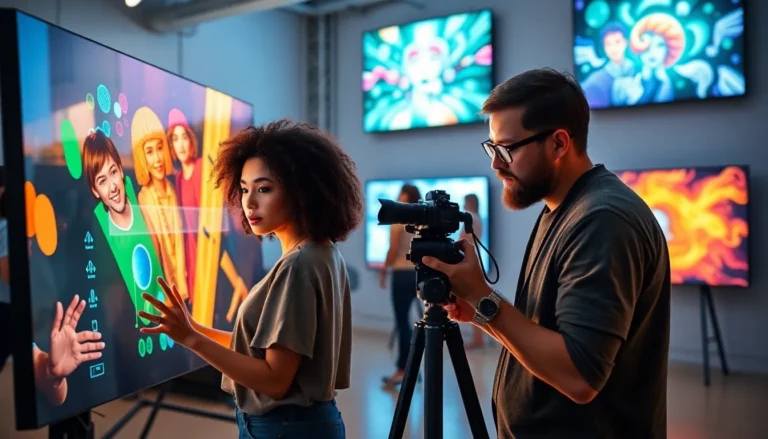
In a world where a picture is worth a thousand words, audio visual technology takes that notion and cranks it up to eleven. Imagine transforming a mundane presentation into an immersive experience that makes your audience sit up and say, “Wow!” Whether it’s a corporate meeting, a wedding, or a blockbuster movie, AV technology is the secret sauce that adds flair and excitement.
Table of Contents
ToggleOverview of Audio Visual Technology
Audio visual technology encompasses various tools and systems that integrate sound and visual elements to create engaging presentations. This technology includes projectors, screens, microphones, speakers, and video conferencing equipment. Effective integration of these components enhances the clarity and appeal of content delivered during events.
Various sectors utilize audio visual technology to achieve specific goals. Corporate settings leverage AV systems for meetings, training sessions, and conferences. Weddings often feature AV elements for live streaming ceremonies and capturing memorable moments. The film industry depends heavily on audio visual technology to produce compelling visual narratives.
AV technology also plays a prominent role in education. Classrooms equipped with interactive displays and sound systems facilitate dynamic learning environments. Students benefit from enhanced participation when using audio visual aids, which cater to diverse learning styles.
Accessibility remains a significant consideration in audio visual technology. Tools such as captioning and assistive listening devices ensure inclusivity for all participants. Event planners prioritize these features to accommodate guests with varying needs.
Data indicates that audience engagement increases substantially when presentations utilize audio visual technology. For example, studies show that presentations incorporating visuals can enhance retention by up to 65%. Investing in quality AV systems translates to improved audience interest and interaction.
Innovation continues to shape the future of audio visual technology. Developments in virtual reality and augmented reality open new avenues for immersive experiences. Adopting cutting-edge technologies allows organizations to stay competitive and provide unique offerings to their audiences.
Key Components of Audio Visual Technology
Audio visual technology comprises essential components that significantly enhance communication and engagement across various settings. Focusing on audio and visual equipment reveals how these tools improve overall event experiences.
Audio Equipment
Audio equipment consists of microphones, speakers, and sound mixers. Microphones capture sound accurately, enabling clear communication during events. Speakers distribute sound effectively, ensuring that all audience members hear presentations or performances. Sound mixers allow for precise control of audio levels and effects, contributing to a polished output. Proper selection of audio equipment enhances clarity and reduces distractions, promoting better audience engagement. Data showcases that effective audio setups can increase retention significantly, allowing participants to absorb and remember 65% more content.
Visual Equipment
Visual equipment includes projectors, screens, and interactive displays. Projectors deliver images and videos that captivate audiences, offering visual clarity. Screens reflect these visuals, enhancing the viewing experience, especially in larger settings. Interactive displays encourage audience participation by enabling them to engage directly with content. The right visual tools create immersive environments that keep attention focused, thus improving message retention. Studies indicate that incorporating high-quality visuals alongside audio boosts information retention rates and involvement.
Applications of Audio Visual Technology
Audio visual technology plays a crucial role in various sectors, enhancing engagement and experiences. Its adaptability allows for creative applications in education, business, and entertainment.
Education
In education, AV technology transforms traditional classrooms. Interactive displays facilitate dynamic lessons, making learning more engaging for students. Incorporating sound systems ensures clarity during lectures, boosting overall participation. Studies show that effective use of AV tools can increase student retention by up to 65%. Furthermore, features like assistive listening devices and captioning enhance inclusivity, making learning accessible for everyone.
Business
AV technology significantly impacts the business sector, streamlining communication and collaboration. Video conferencing systems allow remote teams to connect seamlessly, improving productivity. Presentation tools, such as projectors and large screens, enhance clarity during meetings, ensuring messages resonate with audiences. Research indicates businesses witnessing effective AV integration experience increased engagement levels. Using AV technology in training sessions leads to better knowledge retention, enhancing employee performance and fostering professional growth.
Entertainment
In the entertainment industry, AV technology creates immersive experiences. High-quality sound and visuals draw audiences into movies and live performances, elevating storytelling. The film industry relies on advanced equipment to ensure captivating narratives engage viewers fully. Moreover, developments in virtual and augmented reality are redefining entertainment experiences, allowing audiences to interact more dynamically. Utilizing AV technology enhances audience satisfaction and retention, solidifying its importance in creating memorable experiences.
Future Trends in Audio Visual Technology
Emerging technologies shape the future of audio visual (AV) technology significantly. Increased adoption of artificial intelligence drives smarter AV solutions, enhancing real-time data analysis and user interaction. Virtual and augmented reality applications create immersive environments, revolutionizing how audiences experience content across sectors.
Cloud-based AV systems allow seamless access to resources and collaboration, ensuring flexibility in corporate meetings and events. Systems with integrated video conferencing make remote participation easier and more natural. Innovations in high-definition displays ensure clarity and detail, captivating viewers in gaming and entertainment.
Advancements in audio equipment focus on spatial audio, providing a more immersive listening experience. Enhanced surround sound technology improves engagement in both educational settings and corporate presentations. Solutions that utilize intelligent sound optimization adapt automatically to different environments, ensuring quality regardless of the venue.
Energy efficiency and sustainability remain key considerations for future AV equipment development. Manufacturers prioritize eco-friendly practices while delivering top-notch performance. New products featuring recyclable materials align with corporate social responsibility initiatives, appealing to environmentally conscious consumers.
Key trends also emphasize accessibility features in AV technology. Solutions that include advanced captioning and audio description software cater to diverse audiences. Organizations that invest in inclusive AV technology create welcoming experiences for everyone.
Future developments in AV technology promise to transform how people connect, learn, and entertain. Engagement tools will continue evolving, focusing on interactivity and audience participation. Data indicate that organizations embracing these trends can achieve improved communication and retention, ensuring their relevance in the ever-changing landscape.